
An Incredibly Easy Method That Works For All
10 Apr 2021
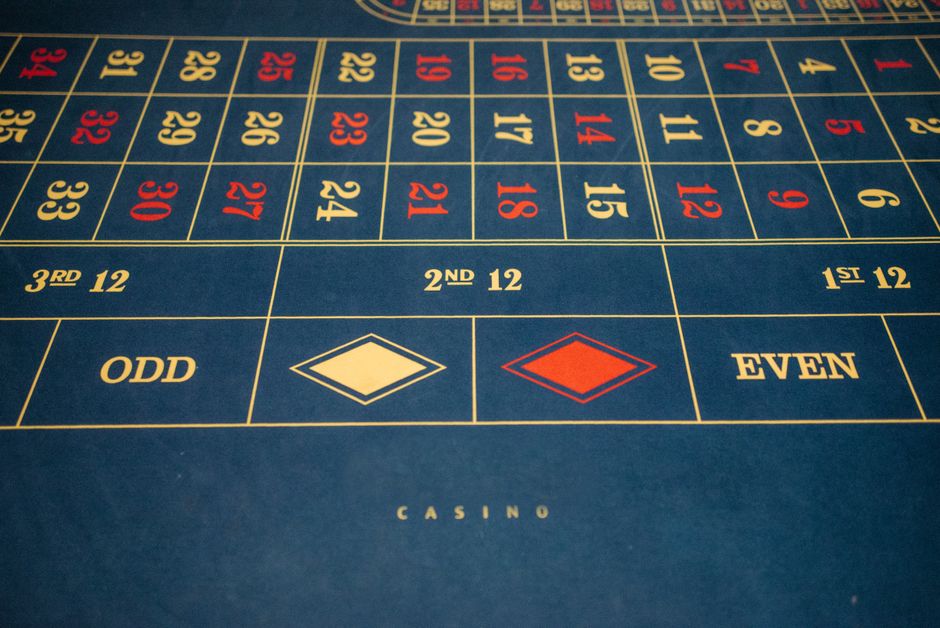
You know the feeling. Three hours in, you're down $400, and that bonus round is just one spin away. The reels are teasing you — two scatters on screen twice in the last twenty spins. Surely it's coming. So you keep going, chasing a payout that math has already decided probably won't arrive. This isn't bad luck. It's a carefully engineered business model, and once you understand how it actually works, you'll play very differently.
Every regulated slot publishes something called RTP — Return to Player. A game with 96% RTP is advertised as returning $96 for every $100 wagered. Sounds generous, right? Here's the catch: that 96% is calculated over millions of spins, measured across an entire game's lifespan, not your session. And the 4% house edge compounds brutally fast.
Let's make it concrete. If you spin $1,000 total on a 96% RTP slot, your theoretical loss is $40. Lose that $40, spin another $1,000, and you've lost $80. The casino doesn't need you to lose every spin — it just needs volume. This is why casinos hand out free spins and cashback offers. They're not being generous. They're buying your volume.
Always check the RTP before you play. The difference between 94% and 97% is enormous over hundreds of sessions, and most casual players never look.
RTP alone doesn't explain why slots feel so unfair. That's variance — the statistical spread of outcomes around that average. High-variance slots (think Gates of Olympus or Big Bass Bonanza) pay almost nothing for long stretches, then dump a massive payout. Low-variance slots (Starburst is the classic example) drip small wins constantly so you feel like you're swimming, not drowning.
The problem is that humans are pattern-seeking animals. When you get two scatters five times in an hour, your brain reads it as signal. It isn't. Scatter frequency is fixed in the math model, and the bonus round isn't "due." Slot reels have no memory. Every spin is independent, and the near-miss designs — where the third scatter lands just one row off — are frequently deliberate. Some jurisdictions now ban near-miss mechanics specifically because they manipulate player psychology.
Here's where betting and poker diverge sharply. Slots are pure negative expectation — you cannot win long-term. Poker, specifically Texas Hold'em, is a game of skill played against other humans, with the house taking a small rake. A skilled player can beat weaker players consistently over thousands of hands. The rake is the price of entry, not your main enemy.
If you want to actually be profitable in iGaming, poker is one of the few realistic paths. But it demands real work: For a closer look, UK88 has helpful details.
Professional online cash game players grind win rates around 3 to 5 big blinds per 100 hands. That's it. Not glamorous, but mathematically real and repeatable. A slot player has no equivalent figure because the number doesn't exist. Further details are available through UK 88.
Sports betting sits between slots and poker. You're playing against the bookmaker's margin, usually 4 to 7% baked into the odds, but you're also playing against your own ability to assess probabilities more accurately than the market. Sharp bettors find mispriced lines — usually in less popular leagues, obscure markets, or early lines before money moves the number.
The single most useful concept here is expected value (EV). A +150 underdog that you genuinely believe wins 45% of the time has positive EV. A -200 favourite you think wins 60% of the time has negative EV. Most recreational bettors pick winners; sharp bettors pick prices. Two bettors can back the exact same team and only one of them made a good bet — it depends entirely on the odds they took.
Watch how odds shift after you place a bet. If you took +150 and the line moves to +120, the market is agreeing with your side — you got value. If it drifts to +180, money is flowing against you. Tracking closing lines versus your number is one of the most reliable ways to measure your own skill over a few hundred bets.
Whatever you play, structure beats willpower. Set a loss limit before you open the app — not a vague intention, a hard number. Many regulated operators are legally required to offer deposit limits, session timers, and cool-off periods, and those tools exist for good reason.
One more thing that seasoned players learn: a big win on a slot often triggers a state where you play looser and faster, giving back more than you won. Casinos know this pattern too. They've extracted it from millions of accounts.
The iGaming industry isn't evil, but it isn't your friend either. Slots are entertainment products engineered for their margins. Poker is a competitive arena where skill genuinely pays. Sports betting is a pricing game where disciplined research beats gut feeling. Knowing which category you're in at any given moment is the difference between paying for fun and paying for someone else's new lobby floor. Choose your battles with the math, not the mood, and you'll be one of the few players who walks away on their own terms.

The Jollyjetty We spend our time finding what works so you don't have to, and sharing exactly what made the difference.

April 25, 2019 at 10:46 am
Take in the iconic skyline and visit the neighbourhood hangouts that you've only ever seen on TV. Take in the iconic skyline and visit the neighbourhood.


Want to be notified when we launch a new template or an udpate. Just sign up and we'll send you a notification by email.


Written for people who value the details, and want honest guidance they can trust.

Soldman Kell
April 25, 2019 at 10:46 am
Take in the iconic skyline and visit the neighbourhood hangouts that you've only ever seen on TV. Take in the iconic skyline and visit the neighbourhood.